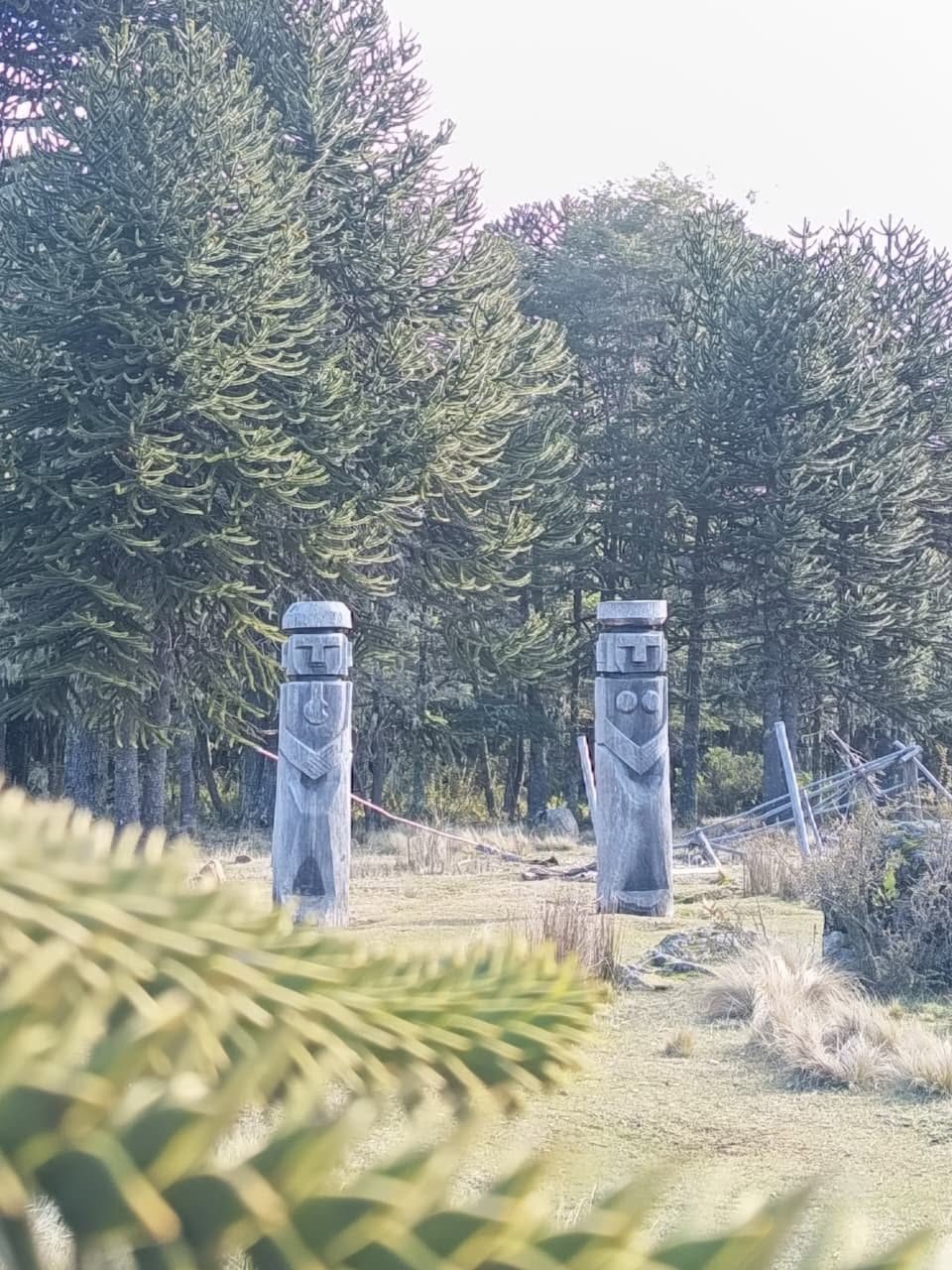
Walk through southern Chile long enough and you'll come across a tall wooden figure with a calm face and arms crossed over its chest. It's a **chemamüll**, and behind its simple shape lies one of the deepest traditions of the Mapuche people.
## What the name means
In Mapudungun, *che* means "people" or "person" and *mamüll* means "wood". Chemamüll means **"wooden person"**. It isn't an exact portrait: it represents someone's appearance and spirit.
## What it was made for
Its main use is funerary. The chemamüll stood at the head of the grave, in the Mapuche cemetery or *eltun*, to mark where the person rested. But its job doesn't end there: according to tradition, it **accompanies the spirit's journey** to the other world and helps it reunite with its ancestors. That's why many were set up alone, facing the sea or a horizon that mattered to the community.
They also appear in ceremonial spaces such as the *nguillatun*. There they don't represent a person who died, but the forces that connect the different worlds.
## Man or woman
There are male and female chemamüll. The figure in our photo, for example, has female features. Sometimes they were placed in pairs when two deaths happened close together.
## Carved from a whole tree
They're carved from a single trunk of noble, long-lasting wood, above all **roble pellín** (southern oak) and laurel; coigüe, lenga and canelo are also mentioned. They measure between 1.5 and 3 meters or more. The largest were reserved for people of authority, such as a *longko* or a *machi*.
Tradition called for finding the tree in the forest, **asking its permission** and holding a prayer before cutting it. The shape was guided by dreams (*pewma*) and visions. Once finished, it was planted with songs and prayers.
## Made to return to the earth
A chemamüll isn't meant to last forever. For many Mapuche knowledge keepers, the right thing is for the wood to age in the rain and sun and return to the earth, just like the person it represents. That's why those kept in museums, such as the one at the Chilean Museum of Pre-Columbian Art, are considered out of their cycle.
## A living tradition
They're still carved today, with axes, adzes and also chainsaws for the big cuts. Beyond their ceremonial use, the chemamüll has become a symbol of the presence and cultural resistance of the Mapuche people.
## How to look at one when you find it
- It's a sacred object: **don't climb it, touch it or mark it**.
- If it's in a cemetery or ceremonial space, ask before entering or taking photos.
- Take your photo calmly and from a respectful distance.
On our outings to Nahuelbuta we walk through Mapuche territory, and sharing these stories along the way is part of the experience.